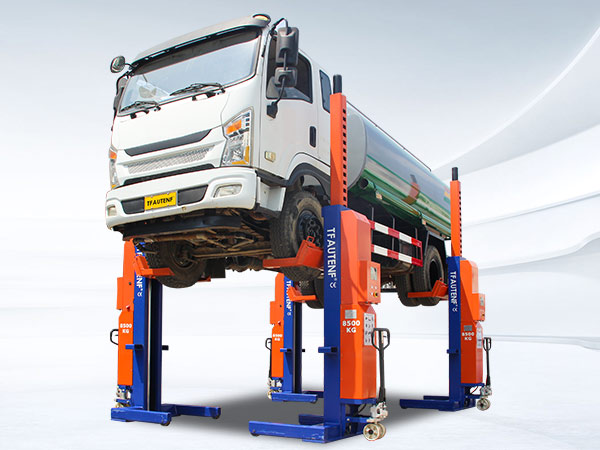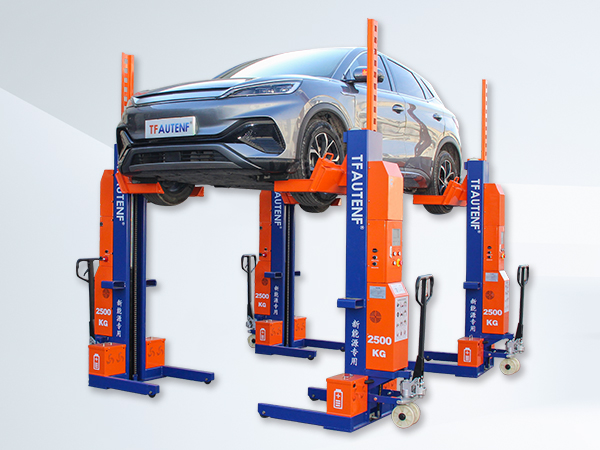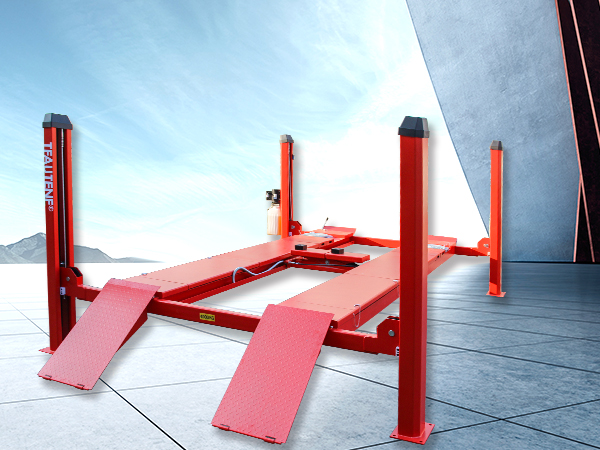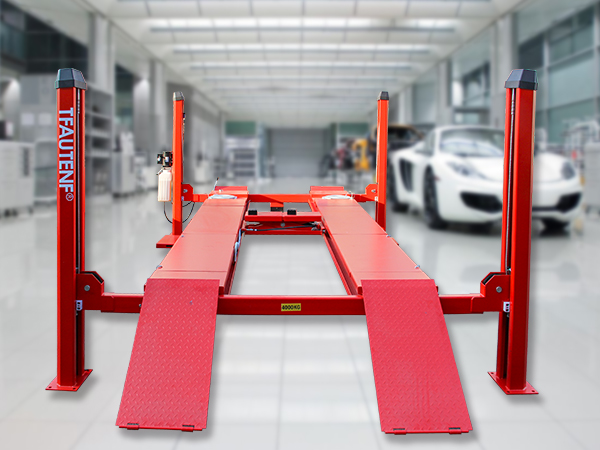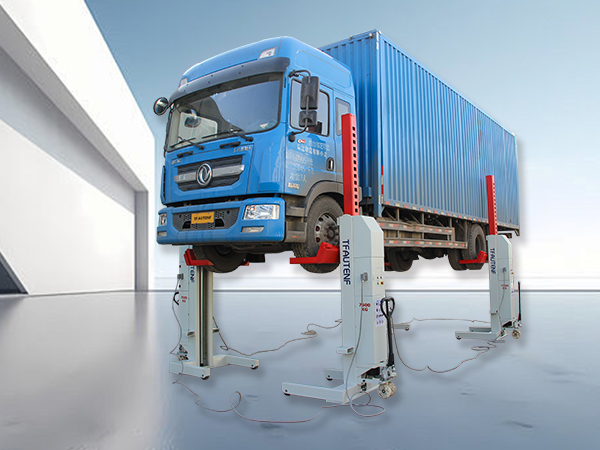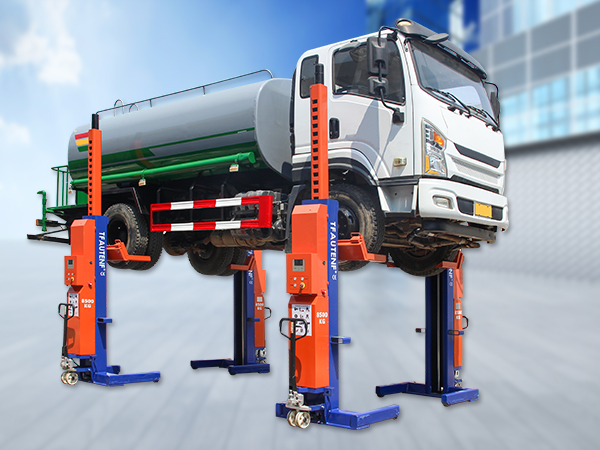
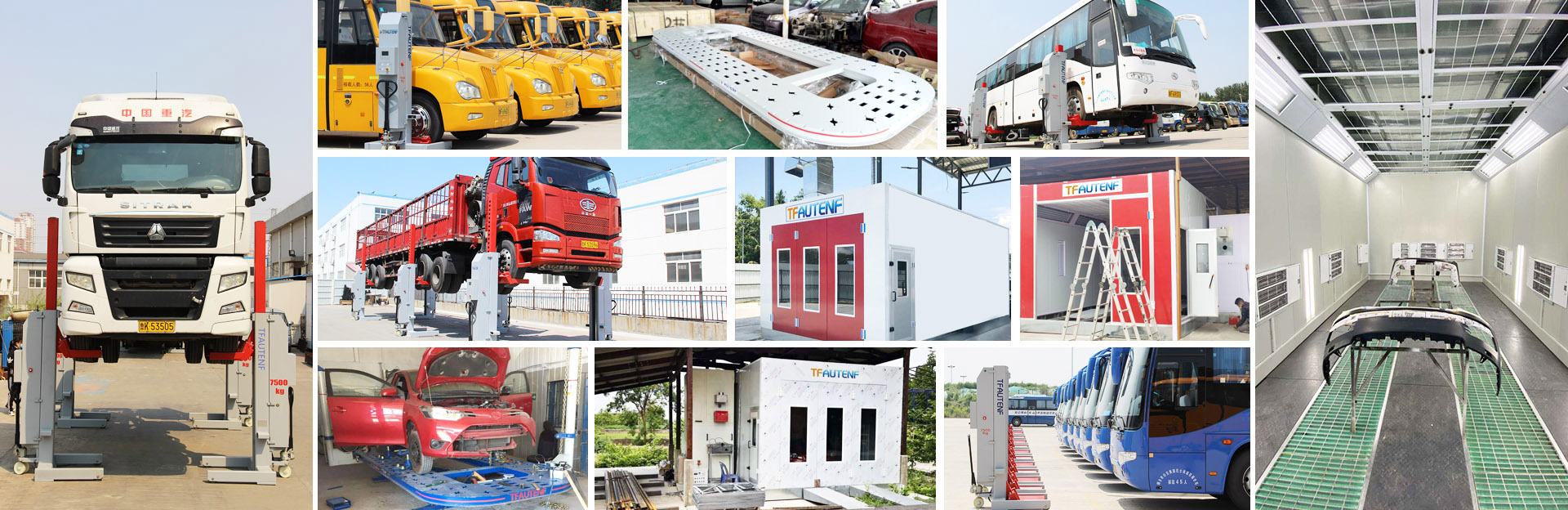

The heavy duty truck lift is a core piece of equipment in maintenance operations, and its correct use directly impacts personnel safety and work efficiency. To ensure safety and fully utilize the equipment's performance, please focus on the following key operational points:
Safety is the primary principle. Before operation, it is essential to strictly verify that the total vehicle weight does not exceed the lift's rated load capacity. For tire-engagement lifting, precise positioning is crucial: ensure the support arms fully contact and securely "grip" the central tread area of the tires, avoiding contact with the wheel rims or squeezing the tire sidewalls. Before lifting, confirm the vehicle's parking brake is engaged and wheel chocks are placed, and that the support arm locking mechanisms are properly engaged. During the lifting process, personnel must not enter the area beneath the vehicle. Once the vehicle is raised to the working height, immediately engage the mechanical safety locks to establish dual-layer protection.
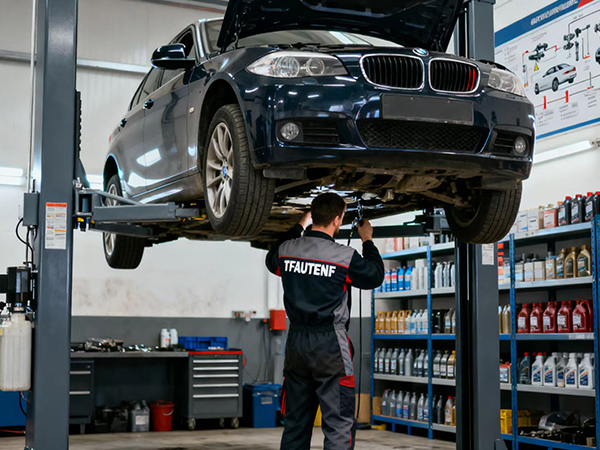
Standardized operation enhances efficiency. An appropriate lifting height creates a spacious and safe workspace for undercarriage inspection and repair. The tire-engagement design leaves the tires completely suspended, facilitating comprehensive work on the wheel hubs, brakes, and suspension systems. It is recommended to use auxiliary equipment such as tool carts and parts trays to further optimize workflow and achieve efficient maintenance.
Regular maintenance ensures performance. Daily maintenance should focus on cleaning and inspecting the rubber pads on the support arms to prevent wear, aging, or oil contamination that could affect grip and anti-slip properties. Additionally, regularly check the hydraulic system, chain or wire rope tension, and lubrication status to ensure smooth and reliable equipment operation.
Adhering to standardized procedures and prioritizing maintenance are fundamental to ensuring lifting safety, extending equipment lifespan, and improving repair efficiency. Make precision and caution a habit, allowing the lift to serve as a solid foundation for the safe operation of your fleet.