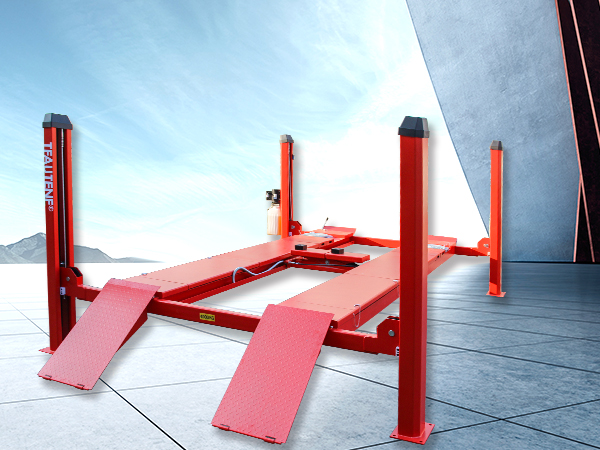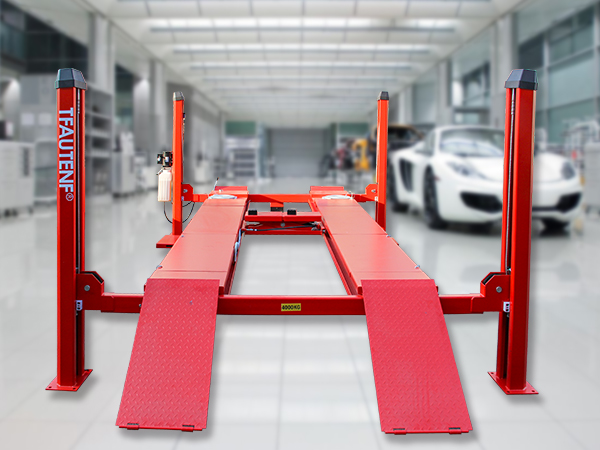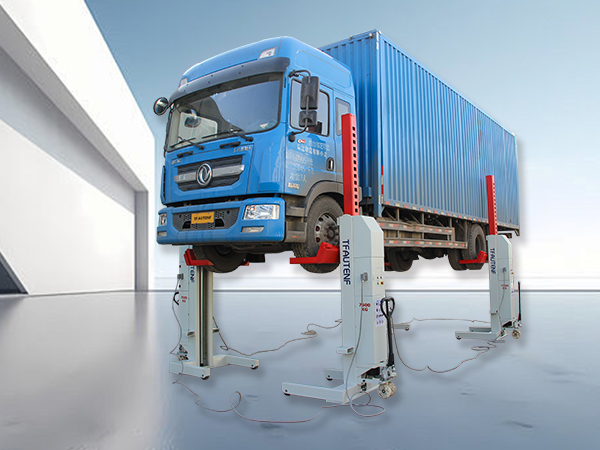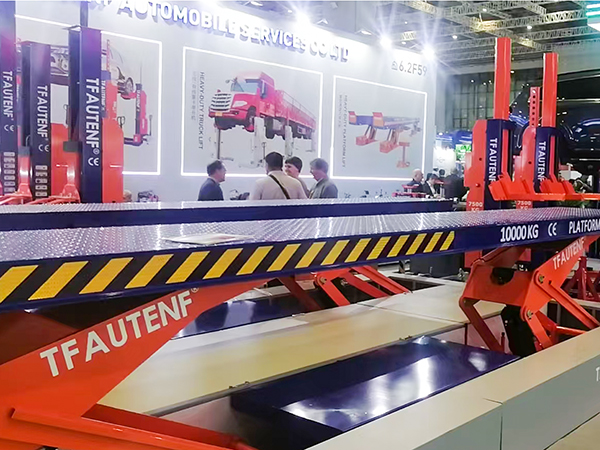
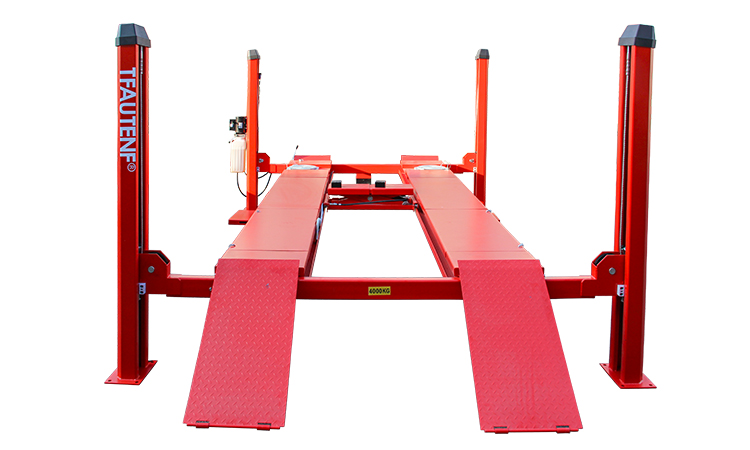
Whether you're a repair shop owner or a serious DIY car enthusiast, a reliable four-post car lift is a powerful tool. However, with varying quality in the market, focusing only on price and appearance can lead to costly mistakes. Overlooking the following three critical points during selection can waste your money and potentially create serious safety risks.
1. Identify the "Rated Lifting Capacity," Not the Marketing Hype.
This is the safety baseline! Always check the rated lifting capacity on the machine's nameplate; it indicates the safe working limit of the design. Do not be misled by the advertised "maximum lifting weight." For instance, consistently using a 3-ton rated lift for a 3.5-ton vehicle will cause excessive fatigue in core components like cylinders and cables, posing a significant risk.
2. Pay Attention to "Lift Travel" and "Minimum Height" for Practicality.
When fully raised, does your workshop have sufficient clearance? At its lowest point, can vehicles easily drive on and off? The lift travel determines your working range, while the minimum height (typically 150-200mm) affects accessibility. Make your choice based on the ground clearance of your common vehicle types and your site conditions to avoid purchasing an unusable unit.
3. Verify the "Safety Devices"—Your Lifeline.
A qualified four-post lift must be equipped with mechanical safety lock devices (to lock the platform in place in case of hydraulic failure). During selection, insist on a live demonstration from the seller: simulate a system pressure loss at mid-height and observe if the mechanical locks engage promptly and securely at each stopping point. This verification step is non-negotiable.
In summary: Safety is paramount. Investing in a lift is essentially an investment in long-term safety assurance. When purchasing, always request and verify the product certification, and meticulously check the key parameters and construction mentioned above.