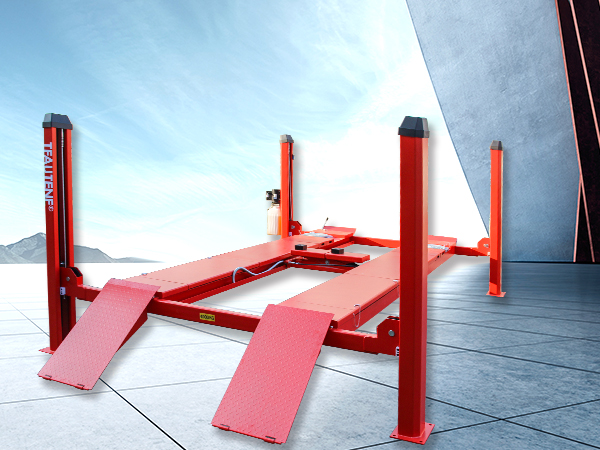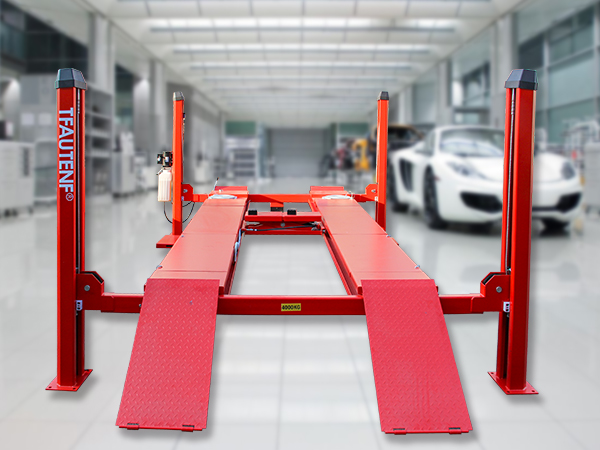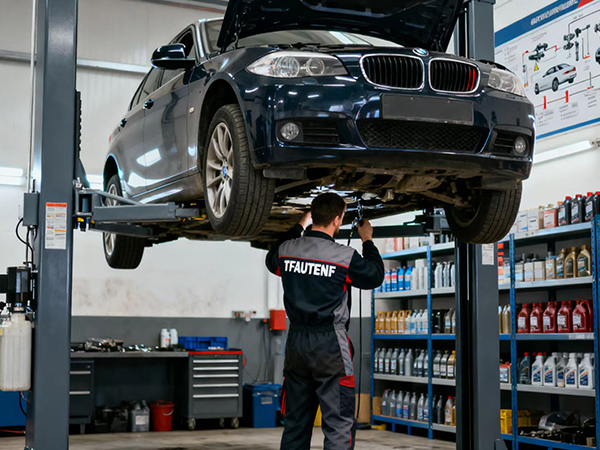
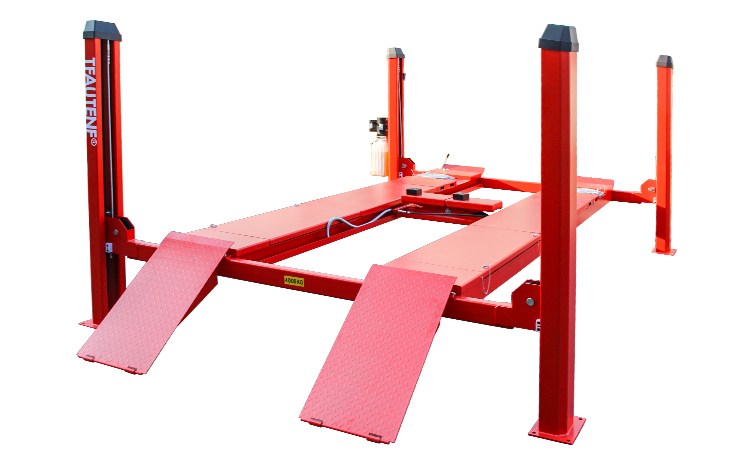
A four-post car lift is the backbone of any garage. To ensure this "strongman" works reliably and safely for years to come, proper maintenance is key. Remember the seven-word mantra: "Inspect Often, Lubricate Regularly, Replace Periodically." This simple routine will significantly extend your lift's lifespan and help prevent safety hazards.
Inspect Often: The Essential Pre-Use Check (Weekly)
Make it a habit to perform a quick 5-minute inspection before each use:
Structure: Visually inspect the four columns for any obvious deformation, cracks, or abnormal rust.
Cables/Chains: Check the steel cables or chains for broken strands, burrs, severe wear, or deformation.
Hydraulic Lines: Look at all hydraulic hoses and fittings for signs of leaks, oil residue, or damage.
Test Locks: With no load, raise the lift to different heights and test that the mechanical safety locks engage with a solid "click" every time.
Lubricate Regularly: Keep the "Joints" Moving Smoothly
The moving parts—slides and rollers—are critical. Inadequate lubrication accelerates wear and causes noise.
Daily/After Use: Use an air gun or brush to clear dust and metal debris from the slide rails.
Monthly: Apply a sufficient amount of special lithium-based grease to all slide rail surfaces and grease fittings (zerks). Proper lubrication ensures quiet and smooth operation.
Replace Periodically: Change the Hydraulic Oil on Schedule
Hydraulic oil is the lifeblood of the system; it degrades, gets contaminated, and loses effectiveness over time.
First Change: For a new lift, replace all hydraulic oil after the first 6 months of use to flush out fine particles from the break-in period.
Ongoing Schedule: Thereafter, based on usage frequency, change the oil completely every 1-2 years or approximately every 500 operating hours. Always use the correct grade (e.g., ISO VG46) of anti-wear hydraulic oil and clean or replace the oil filter.
Key Recommendation: Keep a simple Equipment Maintenance Log to record the dates of every inspection, lubrication, and oil change. Consistent, documented maintenance is the most responsible investment you can make in both operational efficiency and personal safety.